Business reporter, BBC News
 Getty Images
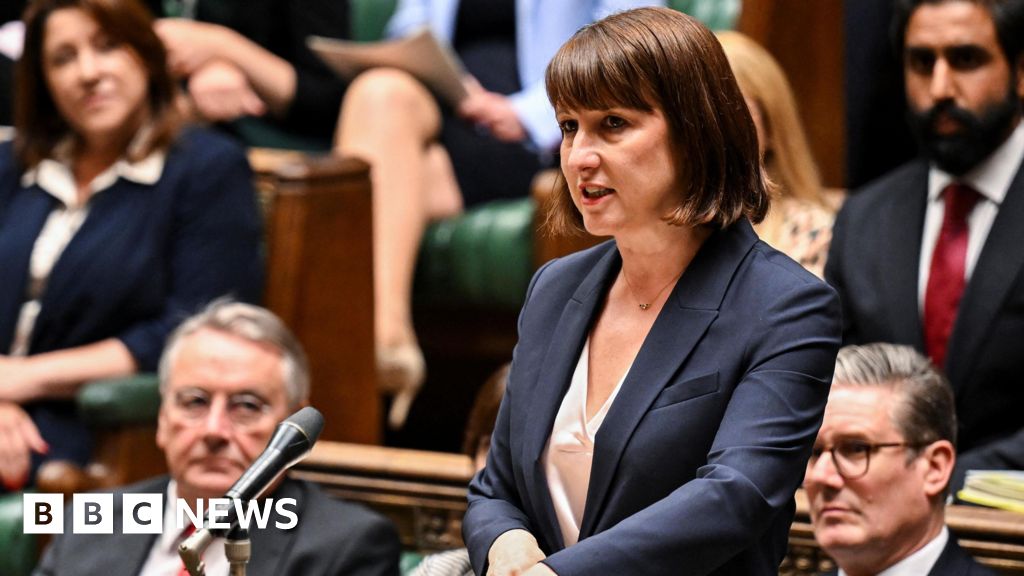
The chancellor will give an update on her plans for the UK economy when she gives a statement alongside an economic forecast on 26 March.
Rachel Reeves has previously ruled out further tax rises, but faces difficult choices because of the performance of the UK economy and world events.
What is the Spring Statement and when is it?
The Office for Budget Responsibility (OBR), which monitors the government’s spending plans and performance, will publish its forecast on the UK economy on Wednesday 26 March.
It will also provide estimates on the cost of living for households and whether it thinks the government will stick to its self-imposed rules on borrowing and spending.
Reeves will present the watchdog’s main findings to Parliament, and alongside this will make her Spring Statement on the economy.
After she has spoken, the opposition, likely to be either Conservative leader Kemi Badenoch or shadow chancellor Mel Stride, will respond.
What is the chancellor expected to announce?
Reeves has committed to one major economic event – the Budget – each year, to “give families and businesses stability and certainty on tax and spending changes”.
That means no big policy announcements are made on 26 March, but that’s not stopping them being made beforehand.
With the economy seen to be underperforming and global factors, such as US trade tariffs, indirectly impacting the UK, there is growing speculation over whether the chancellor will break her self-imposed rules on borrowing.
The OBR’s forecast is expected to confirm that the £9.9bn financial buffer to meet her budget rule by the 2029/30 financial year, has been wiped out.
Reeves has repeatedly said her rules are “non-negotiable”. Her two main rules are:
- Not to borrow to fund day-to-day public spending
- To get debt falling as a share of national income by the end of this parliament
Ahead of the Spring Statement, the Treasury has drafted plans for several billion pounds of spending cuts.
It is understood welfare spending is in the firing line, but other government departments will also see budgets pruned.
The government already had concerns about the rising number of benefit claimants and Reeves has previously pledged “fundamental” reform of the welfare system.
The Treasury has blamed global economic policy and geopolitical uncertainty over the outcome of conflicts in Ukraine and Middle East, for raising government borrowing costs.
Possible other announcements that are being reported include:
- Reducing the £20,000 tax-free annual limit in cash ISAs, to encourage more people to invest their savings in stocks and shares
- Confirming details of how international aid funding will be reallocated to defence, following the prime minister’s announcement that UK defence spending will rise to 2.5% of national income by 2027.
Government sources have been keen to state that this event is not a major one because it will not include tax rises, only spending cuts.
A debateable tax hiking policy could be announced, however, if Reeves decides to extend the freeze on the thresholds at which people start to pay different rates of income tax.
The policy is known as a hidden tax rise or stealth tax, as it takes effect over time as people are dragged into paying more tax as their pay goes up, without the tax rate rising at all.
Thresholds were frozen by the previous Conservative government until April 2025, but the chancellor could decide to extend the freeze to raise about £7bn a year, according to consultancy Pantheon Macroeconomics and investment bank Citi.
Reeves decided not to extend the threshold freeze in her first Budget, arguing that doing so “would hurt working people” and “take more money out of their payslips”.
Whether any other spending cuts are announced in the Spring Statement or in the Spending Review in June, or even delayed until the next Budget, remains to be seen.
How is the UK economy doing?
Recent figures show UK economic growth has been sluggish – not shrinking, but not growing as desired.
The economy grew by just 0.1% between October and December 2024, according to the latest official figures.
When an economy grows, more businesses can employ extra workers or give pay rises. Firms making higher profits also pay more in tax to the government, which can be spent on public services.
In addition to slow growth, prices are also rising faster than wanted.
The current inflation rate of 3% is higher than the Bank of England’s 2% target, and is forecast to go higher. Inflation could dictate whether interest rates are lowered further from their current 4.5%.
Higher rates mean higher borrowing costs for loans, credit cards and mortgage deals, but it also provides better returns on savings.
Costs for businesses are expected to jump further in April, when National Insurance contributions paid by employers rise. These could be passed on to consumers.
Pressure has also increased on the chancellor’s tax and spending plans after a surplus in government finances missed official forecasts, prompting speculation from economists that she could break her fiscal rules as things stand.
Borrowing costs for the UK surged in January in part due to concerns over the UK’s economic outlook, threatening Reeves’s economic plans. The costs have since fallen back but remain higher than this time last year.
Reeves has also warned that a potential global trade war, despite tariffs not directly targeting the UK, would lower growth and raise inflation.