HomeLife StyleMeet resilient 'living fossil'...

Meet resilient ‘living fossil’ older than dinosaurs, nuclear blast survivor

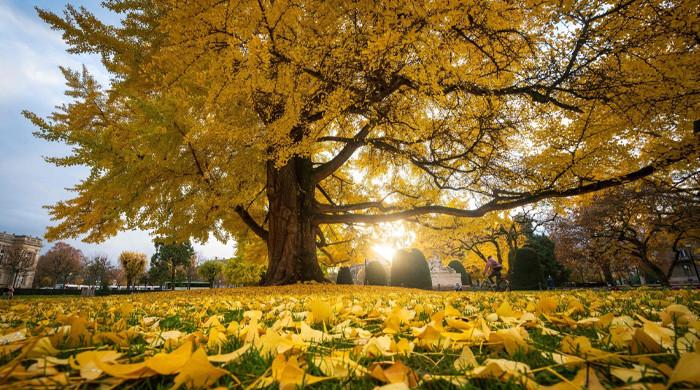
A Gingko biloba tree on a central square in Strasbourg, eastern France, November 25, 2022. — AFP

In the first three seconds after the nuclear bomb “Little Boy” was dropped over Hiroshima by the Allied powers in 1945, temperatures spiked to 7,000°F from ground zero to as far as two miles.

Any form of life within the radius of the detonation succumbed to their deaths instantly. Even buildings melted and the city turned to ash as the fire roared in Hiroshima, according to Forbes. 

What survived the blast, however, is a resilient story of six Ginkgo biloba trees growing just about a mile away from the centre of the explosion. For them, it was just another thing to overcome and continue living.

Despite being stripped of leaves and charred branches due to the explosion, the six trees came back to life within months.

The trees, also known as “living fossils,” have weathered the ice age, mass extinctions, and thousands of environmental changes the Earth has experienced.
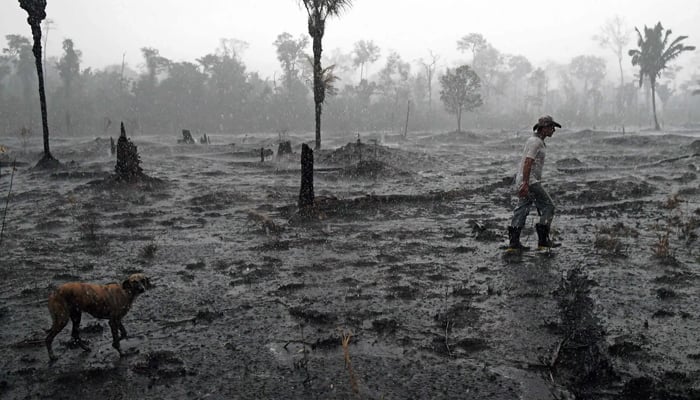
A farmer walked through a burned area of Amazon rainforest near Porto Velho, Brazil, 2019. — AFP

The reason for calling Ginkgo biloba a living fossil is that the trees date back over 290 million years to the Permian period and have withstood mass extinctions, according to National Geographic. 

It was a mass extinction event so bad that it left 96% of all marine species and about three of every four species on land dead, the forests were wiped out and didn’t spring back to life until 10 million years later.

Of the five mass extinctions, the Permian-Triassic is the only one that left large numbers of insect species extinct. The evolution was so severe that it took four to eight million years for the marine ecosystems to recover.
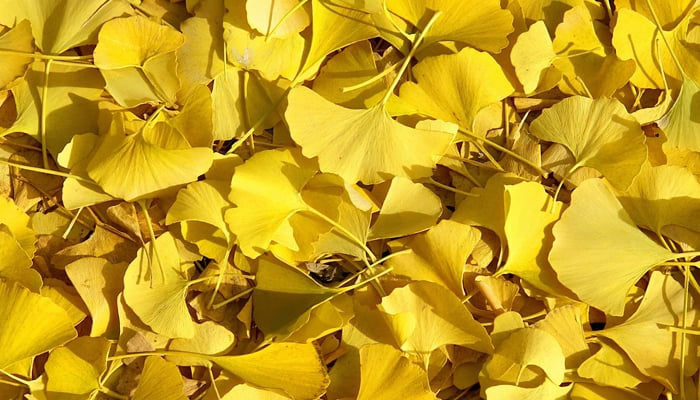
The Ginkgo bilobas fan shaped leaves laying on the ground. — AFP/File
The Ginkgo biloba’s fan shaped leaves laying on the ground. — AFP/File

This period even predates the time when dinosaurs roamed the Earth. The Ginkgo biloba survived and remained the same over millennia with the fan-shaped structure of the leaves.

They thrived across Laurasia — the northern subcontinent — for millions of years until the Cretaceous-Paleogene extinction that wiped out the dinosaurs.

Many species were wiped out, but the Ginkgos remained strong. By the end of the Pleistocene, they were isolated to populations in China. They could have faced extinction, but they were saved due to their resilience, and surprisingly, humanity helped them tackle the challenge.

The living fossils were thought to be extinct in the wild until the early 20th century but they were found to be thriving when small populations were rediscovered in remote China.

Researchers have come to speculate that they were preserved by Buddhist monks.

Today, Ginkgos are spread widely on city streets, parks and several other places all over the world. They are resistant to pollution, pests and harsh weather that harbours in urban life. 

Source link

- A word from our sponsors -

spot_img

Most Popular

More from Author

- A word from our sponsors -

spot_img

Read Now

Handlers for former Westminster dog show winners talk preparation, what it takes and retirement

Handlers for former Westminster dog show winners talk preparation, what it takes and retirement - CBS News ...

PepsiCo (PEP) Q4 2025 earnings

PepsiCo on Tuesday reported quarterly earnings and revenue that topped analysts' expectations, fueled by improving organic sales across its business.Demand for the company's snacks has been sluggish as consumers balk at higher prices. This year, Pepsi plans to lower prices on products like chips from its North American food...

7 playground rules that actually keep kids safe

Playgrounds are a world of excitement, but they also come with unseen risks. By following simple guidelines such as inspecting the play area, sharing equipment, wearing appropriate footwear, refraining from pushing others, adhering to designated age zones, and being aware of their guardian, kids can navigate...

Mysterious dark matter seen in new high-resolution map of distant galaxies

A new high-resolution map of distant galaxies may help scientists understand a mysterious invisible substance that helps hold the universe together.The ordinary matter all around us — stars, planets and people — makes up just 5% of the universe. For decades, researchers have...

Duke of Edinburgh brings royal inspiration to mangroves and youth

The Duke of Edinburgh touched down in the United Arab Emirates on 31st January, for a whistle-stop mission that’s...

LPG Rates Increased After OGRA Decision

The Oil and Gas Regulatory Authority (Ogra) has increased the price of liquefied petroleum gas (LPG). According to a notification, the price of LPG has risen by Rs6.37 per kilogram. Following the increase, the price of a domestic LPG cylinder has gone up by Rs75.21. The...

BBC Inside Science – Should we rethink navigating by GPS?

Available for 31 daysThis week 14 European countries warned that “maritime safety and security” was being put in jeopardy by Russian interference. The Royal Institute of Navigation says GPS is so vulnerable to so called ‘spoofing’ and ‘jamming’ that we need to rethink the navigation systems on...