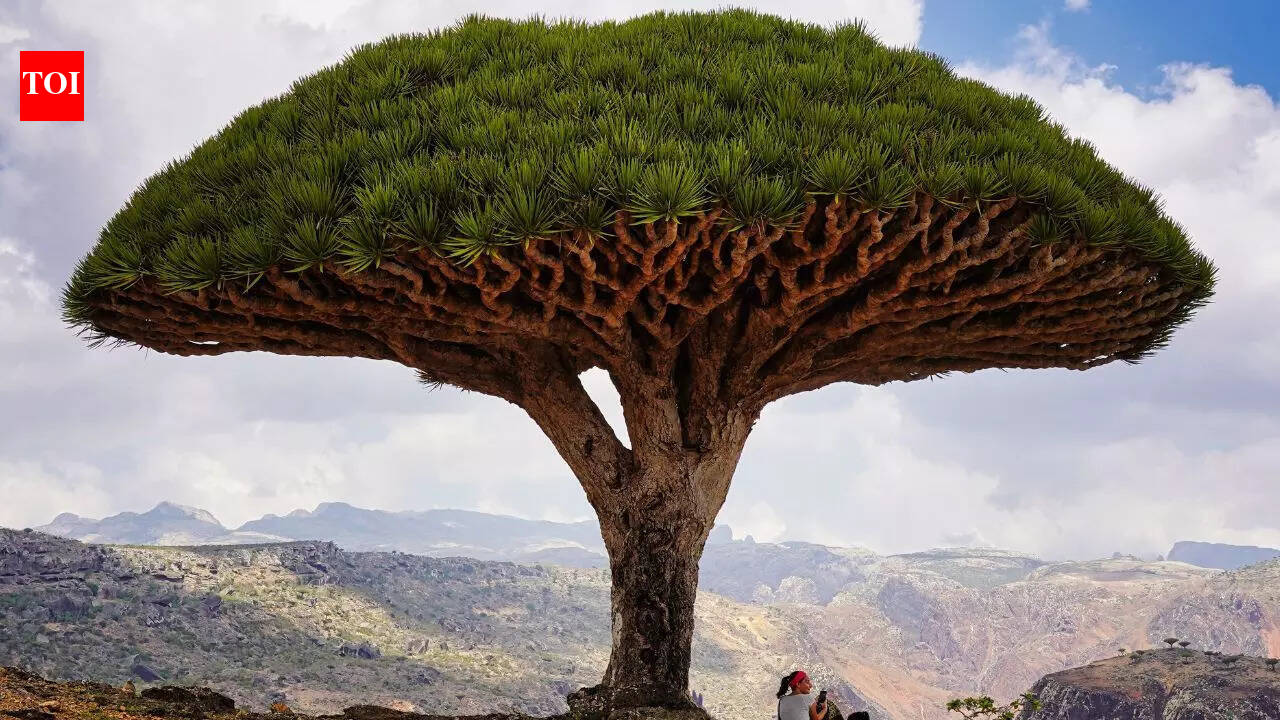
First impressions reveal that this tree has almost a surreal quality to it, a tree that seems to bleed bright red when its bark is sliced. This is no mythological setting; it is actually a natural occurrence found in the Dracaena, or dragon tree, species of trees. The bright red liquid that drips from the tree is known as dragon’s blood, and it has long fascinated mankind. Though ancient civilisations believed it to have something to do with dragons and magic, and that it possessed healing properties, current scientific research has revealed that the dragon’s blood is actually a component of the tree’s survival mechanism. Scientists are currently analysing the chemical composition of the dragon’s blood because of its long history of use in traditional medicine. The dragon tree continues to be a fascinating example of how traditional natural resources can lead to both mythological and scientific exploration.
What exactly is “dragon’s blood”
Despite the ominous name, dragon’s blood is not actually blood, but rather a plant resin.When the bark of a Dracaena tree is damaged, the tree secretes a red, thick resin that dries in the air. This resin is very similar to a natural bandage. The resin covers the injured area, protecting it from infection, insects and microorganisms. It effectively serves as a protective barrier for the tree.
Why does the resin turn red
The red pigment in dragon’s blood is a result of bioactive compounds in plants, which include phenols and flavonoids.A scientific study published in Science Direct, titled “Morpho-anatomical basis of dragon’s blood secretion in Dracaena draco stem”, investigated the chemical properties of the resin of the Dracaena tree. The study showed that the resin is made up of chemicals that have been demonstrated to have antioxidant and antimicrobial activities. These chemicals safeguard the tree against bacteria, fungi, and other environmental conditions. The red pigment is just an indicator that the tree is activating its chemical defence mechanism.
What science says about its medicinal properties
The use of dragon’s blood in traditional medicine has been for the healing of wounds, inflammation, and dermatological conditions, and current research is validating these traditional uses.A study published on PubMed, titled “Dragon’s Blood from Dracaena Worldwide: Species, Traditional Uses, Phytochemistry and Pharmacology”, discussed the interaction of some plant resins, such as those with high phenolic content like dragon’s blood, with human tissues. The study concluded that these substances have been found to influence the regulation of inflammation, tissue repair, and antioxidant activity at the cellular level. This explains why dragon’s blood was traditionally used to treat cuts and wounds, not for its magical properties, but because of its ability to facilitate healing.Notably, the researchers emphasise that while the laboratory data is encouraging, dragon’s blood should not be used as a replacement for current medical treatment.
Where dracaena trees grow
Dracaena trees are found in arid and rocky areas, where wounds caused by wind, animals, or adverse environmental conditions are prevalent. The most well-known variety, Dracaena cinnabari, is found on the island of Socotra, while other varieties are found in Africa and Asia.In this extreme environment, the ability to produce a quick-acting protective resin is essential for the tree’s survival. Dragon’s blood prevents water loss and provides an unfavourable environment for microbes, which is a very smart adaptation.
Why scientists are still studying dragon’s blood
Today, dragon’s blood is being researched for possible uses in:
- Natural antimicrobial products
- Anti-inflammatory research
Plant-based antioxidants - Traditional medicine validation
Scientists are particularly fascinated by the way plants such as Dracaena can create very effective protective agents that do not harm the plant itself, and how this information can be used to develop new materials or drugs.
Myth meets modern science
Dragon’s blood may have gotten its name from myths and legends, but it is not just that. It is a very advanced plant defence mechanism that is full of chemicals that protect the tree and, possibly, human tissue under certain circumstances.The Dracaena tree teaches us that sometimes the most mysterious events in nature can be explained by very practical biological processes that are hidden behind the veil of mystery.