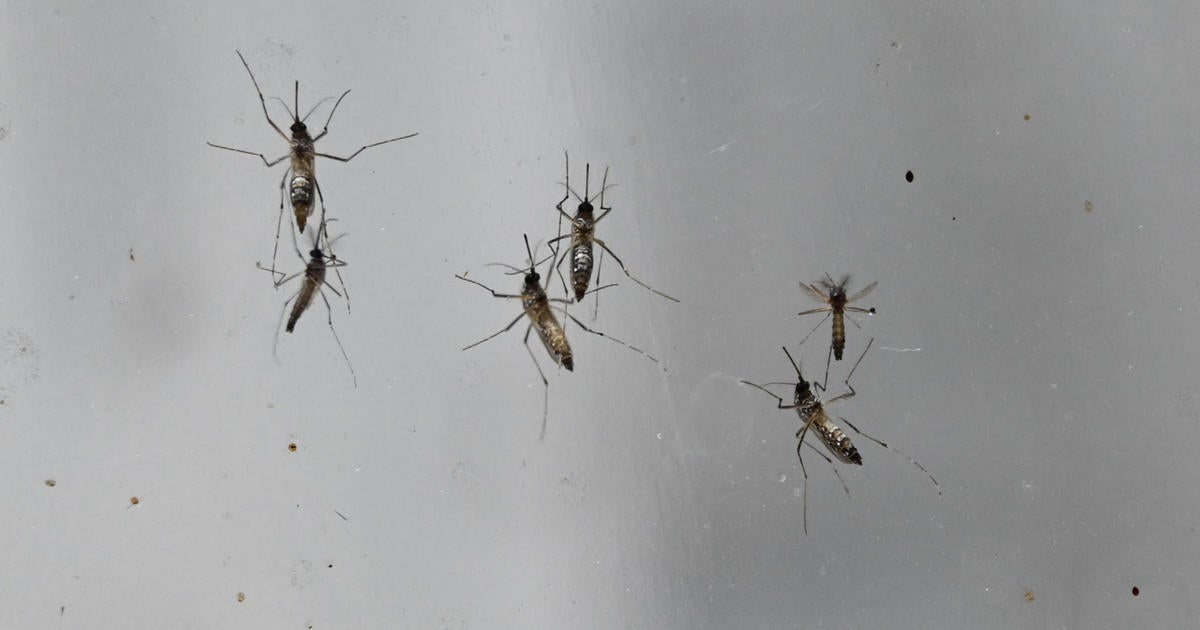
Genetically engineered mosquitoes with toxic semen could be a new weapon against tropical disease, Australian scientists said after trialing the novel pest control method.
The “toxic male technique” aims to breed mosquitoes that express venomous proteins in their semen, killing off females after mating.
Female mosquitoes are targeted because only they bite and drink blood, thereby spreading diseases such as malaria and dengue fever.
Scientist Sam Beach from Australia’s Macquarie University said the method “could work as quickly as pesticides without also harming beneficial species.”
“This innovative solution could transform how we manage pests, offering hope for healthier communities and a more sustainable future,” Beach said.
The first proof-of-concept trials used fruit flies, a common laboratory species favored for its short two-week life cycle.
Female flies that bred with “toxic” males had a significantly reduced lifespan, the scientists found.
Researcher Maciej Maselko said the team would now trial the method in mosquitoes.
“We still need to implement it in mosquitoes and conduct rigorous safety testing to ensure there are no risks to humans or other non-target species,” he said.
The mosquitoes would need to be genetically modified so they only expressed the toxic semen once they were released into the wild, the researchers said.
Nature Communications
This could be done through so-called “conditional expression” techniques, which use chemicals or other biological triggers to turn specific genes on or off at will.
This would allow venomous males to successfully mate with females in lab conditions, producing enough viable offspring for the technique to be scaled up.
Genetic engineering has been used for years to control populations of disease-spreading mosquitoes.
Typically, these approaches slow reproduction by releasing hordes of male insects that are genetically modified to be sterile.
Computer models showed techniques actively killing biting females could be far more effective, the research team said.
The research was described in a paper published by peer-reviewed journal Nature Communications on Tuesday evening.
The mosquito has killed as many as 50 billion people over the course of human existence.
Africa bears the brunt of malaria, with 95% of the fatal cases recorded every year, and children under the age of 5 make up about 80% of those deaths. The malaria parasite spreads to people bitten by infected mosquitos, and causes initial symptoms including high fever, headache and chills.
Mosquitoes are responsible for millions of yearly deaths worldwide from malaria, dengue fever and other diseases, according to the World Health Organization.
Eastern equine encephalitis virus is also spread to people by the bite of an infected mosquito. Last year, a New York resident who tested positive for EEE died, and in 2019, the CDC reported at least 15 people died in the U.S. from the rare disease.