Environment Correspondent, BBC World Service
 Reuters
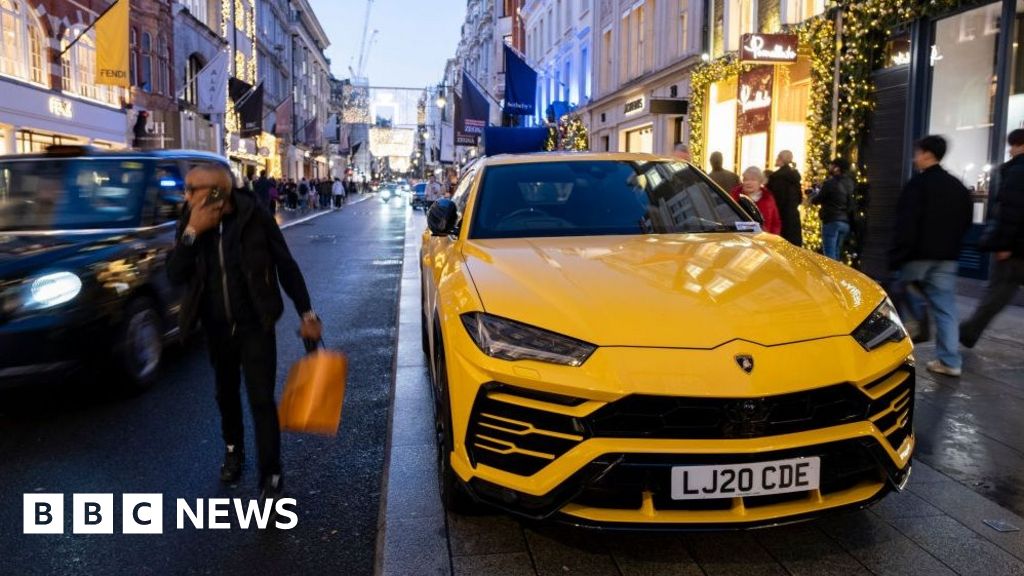
Across the globe more and more Sports Utility Vehicles (SUVs) are being spotted on – and off – the roads.
This is despite predictions from the United Nations of an inevitable pivot towards smaller and more environmentally friendly vehicles because of the urgency of the climate crisis and the rising cost of living.
That pivot has not materialised: globally, 54% of the cars sold in 2024 were SUVs, including petrol, diesel, hybrids and electric makes. This is an increase of three percentage points from 2023 and five percentage points from the year before, according to GlobalData.
Of the SUVs which are now on the road – both new and older models – 95% are burning fossil fuels, according to the International Energy Agency (IEA).
Manufacturers, however, say their new fleets of such cars are increasingly becoming electric, and that not all SUVs now being sold cause an increase in emissions.

 Reuters
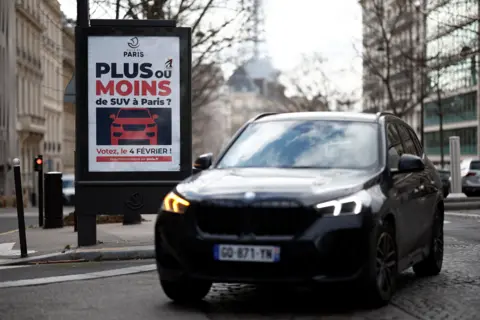
SUVs are hard to miss. They are heavy and larger with spacious interiors, higher ground clearance and a high driving position with a better view of the road, although smaller versions are also on the market.
Environmental campaigners such as Greenpeace see SUVs as one of the villains of the climate crisis and argue that their manufacturing consumes significant resources given their size.
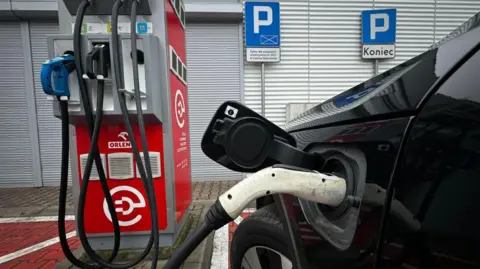
Experts also say they require larger batteries to power their electric versions, which then further increases the demand for critical minerals, putting even more pressure on the planet.
Momentum was thought to be with smaller, energy-efficient electric vehicles. But the sales of standard-sized electric vehicles (EVs) has actually decreased in major markets such as Japan and Germany, and their sales growth has slowed in India.
And in Europe, sales of SUVs have outpaced those of EVs despite indications more than half a decade ago of an opposite trend. In Europe in 2018, 3.27 million small hatchbacks – both those powered by fossil fuels and those by electricity – were sold while 2.13 million were sold in 2024, according to GlobalData.
Its sales forecast manager Sammy Chan said: “This is partly because of the SUV alternatives being offered in smaller [sizes] whose sales in Europe have now grown to nearly to 2.5 million in 2024 from 1.5 million in 2018.”
China saw the largest sales of nearly 11.6 million SUVs in 2024 followed by the US, India and Germany, according to GlobalData.
What is driving this SUV growth?
Industry experts say people’s purchasing power has been improving in many fast-emerging economies, making SUVs the likelier choice of car.
“Manufacturers respond to consumer demand and, increasingly, drivers are attracted to dual purpose vehicles given their practicality, comfort and good view of the road,” said Mike Hawes who is the chief executive of the Society of Motor Manufacturers and Traders (SMMT).
Automobile industry analysts also say that manufacturers are attracted to high profit margins from SUVs: they can make more money from SUVs even though they make fewer vehicles.
“It is the industry that has driven the demand through huge marketing and advertising campaigns in recent years,” said Dudley Curtis, the communications manager at the European Transport Safety Council.
“SUVs offered the industry a simple way of charging more for a vehicle that does the same thing [as others],” he said.
 Getty Images
Are SUVs an issue?
Because of the robust growth in SUVs sales, the IEA says oil consumption of these vehicles has increased by 600,000 barrels per day globally between 2022 and 2023, accounting for more than a quarter of the total annual rise in global oil demand.
“If ranked among countries, the global fleet of SUVs would be the world’s fifth largest emitter of CO2, exceeding the emissions of Japan and various other major economies,” said Apostolous Petropolous, an energy modeller with the IEA.
The agency says that even when compared to medium-sized cars that run on petrol and diesel, SUVs burn 20% more of such fuels as they weigh up to 300 kg more on average.
In fact, road transport is responsible for more than 12% of global carbon emissions which is the main driver of global warming. Scientists say all sectors must rapidly decarbonise if we are to avoid a climate catastrophe.
But industry representatives say in response that not all SUVs now being sold cause an increase in emissions.
“Around two in five of these [new] vehicle models are zero emission as their body type lends itself well to electrification with longer battery range that can reassure consumers concerned about charging accessibility,” said Hawes, from the SMMT.
“This has led to the average CO2 emissions of new dual purpose cars more than halving since 2000, helping the segment lead the decarbonisation of UK road mobility.”
Although the vast majority of new SUVs still burn fossil fuels, IEA officials have said that over 20% of SUVs sold in 2023 were fully electric, up from 2% in 2018.
As for hybrids that can run on both electricity and fossil fuels, a study in Europe by the International Council on Clean Transportation in 2022 found only around 30% of the total distance driven by plug-in hybrid electric vehicles (all types including SUVs) was in electric mode on average.
Similar results were found in other major economies such as the US and China.
Overall, the back-gear towards SUVs, some experts say, has caused a significant setback in the decarbonisation of the transport sector.
“The trend toward heavier and less efficient vehicles such as SUVs (in countries where it is happening) has largely nullified the improvements in energy consumption and emissions achieved elsewhere in the world’s passenger car fleet,” said the IEA.
The UK Parliament’s climate change committee had a similar finding in its 2024 report on decarbonisation in the country.